
In DC, the Tenant Opportunity to Purchase Act (TOPA) has long been one of the city’s most powerful tools for protecting affordable housing and preventing displacement by giving tenants the right to collectively decide what happens when their building is put up for sale. TOPA has enabled thousands of DC residents, particularly legacy residents, working-class families, artists, seniors, and immigrants, to remain rooted in the neighborhoods they call home even as redevelopment and rising rents reshape the city. Today, as TOPA faces renewed political and legislative threats, its importance is more urgent than ever. Weakening TOPA would accelerate displacement and erode the very communities that make DC vibrant and diverse. Protecting and strengthening TOPA is essential to preserving the heart of the city and ensuring that residents shape DC’s future. The stories that follow offer two examples of TOPA’s continued transformative power and show how, with the right support, residents are still using this law to preserve affordability, build collective ownership, and stay in DC today.
Using TOPA to Improve and Preserve DC’s Affordable Rental Stock
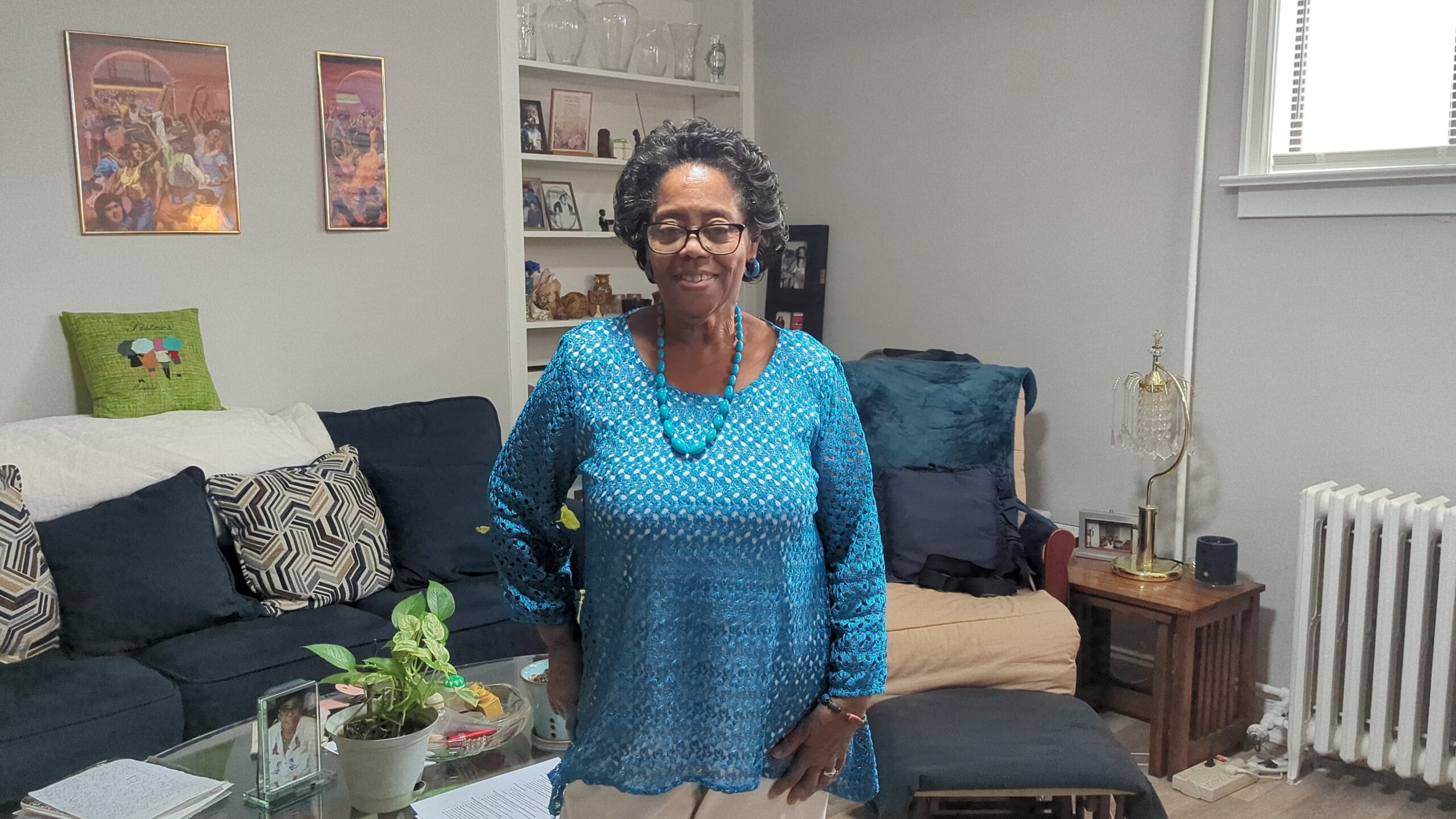
Monnie Early Gordon has lived in DC since she was 12 years old, and has lived at 49-53 Missouri for the past 18 years. In that time she has seen Manor Park transformed from a close-knit neighborhood navigating the safety challenges that DC was riddled with in the 80s and 90s to a safer neighborhood that’s navigating increased amenities and rapid redevelopment. While this redevelopment has brought increased safety, it has also meant an increase in housing costs, something that has priced out many of Monnie’s neighbors from reaping the benefits of this transformation.
Throughout its 30 year history, Mi Casa has worked with the residents of dozens of buildings in this and adjacent neighborhoods and has helped keep 267 units affordable in a neighborhood where a 1 bedroom in a new development typically cost upwards of $2,250. In contrast, the average rent in the building where Monnie lives is around $1,100 for a two-bedroom apartment.. Mi Casa acquired 49-53 Missouri (a 10-unit building) in 2016, when Monnie and her neighbors exercised their rights under the Tenant Opportunity to Purchase Act that states tenants have the right to choose what happens to their building when the owner puts it up for sale. After eight years of living at 49-53 Missouri, Monnie and her husband Jerry, were worried about where they would go when they learned their building was up for sale. The owner, who had been struggling to maintain the building, decided to sell it, leaving all the residents scrambling to figure out their next steps. With the help of Mi Casa, those tenants learned about their TOPA rights and formed a tenant association, where after much deliberation, they decided to select Mi Casa to purchase the building. In exchange, Mi Casa committed to addressing the various issues in the building through an extensive renovation and maintaining the affordability of the units for existing and future residents.
When 49-53 Missouri was put up for sale it needed extensive renovation to address the myriad of issues due to years of deferred maintenance. These included lead-based paint remediation; roof replacement; electrical system upgrades; plumbing and boiler repairs; potential HVAC and energy-efficiency upgrades; and other deferred maintenance necessary to keep the building safe, habitable, and functional for very low-income seniors and families. To complete the essential building upgrades, Mi Casa needed to secure almost $1 million in funding, a process that took more than seven years due to the lack of prioritization for small rental buildings in competitive public funding rounds, rising construction and interest costs, and limited availability of take-out financing for preservation projects. In 2024, Mi Casa Mi Casa was able to move forward by implementing a scaled back upgrade plan and assembling a lean, layered financing structure that combined previously committed DC Department of Housing and Community Development (DHCD) acquisition and repair funds, a private investor loan, and recoverable grants from the Connecting Community and Capital (3C) Program administered by LISC, along with anticipated energy-efficiency rebates through DC Sustainable Energy Utility (DCSEU).
Renovations began in October 2024 and were completed by the summer of 2025. Monnie remembers concerns about the renovation and relocation process vividly. She explains, “We wanted to make sure that we were able to come back into our apartments, but it took so long we weren’t too sure. It was well worth the wait.” During renovations, Mi Casa fixed a major leak coming from her bathroom, as well as replacing kitchen fixtures and finishes, upgrading bathrooms, and providing new flooring and energy star lighting.
Now that the critical renovations are complete, Monnie wants others to know how important it is for TOPA rights to be protected, and how important it is for tenants to know they have these rights. “It’s so important to try and invest and help people buy their buildings.”
Want to learn more about Monnie’s experience? Visit this blog post to hear Monnie share her experience exercising her TOPA rights.
Using TOPA to Make Ownership Accessible and Build Community
Chelsea D. Harrison is the secretary of the 11 Nicholson Street Cooperative and a theater maker by profession. “Anything it takes to tell a story to a group of people, that is what I do,” she explains, describing a practice that spans music, costumes, writing, performing, teaching, and finding space. Born and raised in Washington, DC, Chelsea is also a teaching artist and an artivist, deeply invested in the intersection of art and activism and in how storytelling can help communities meet their needs.
After living in New York City for a few years and a brief stint in the Midwest, Chelsea began her journey back to DC in late 2019 after realizing she wanted to reconnect with her roots and better understand her own artistic practice. However, finding affordable housing in DC while still living in New York was no small feat. “I always feel that this place is miraculous. It’s a miracle place for me because I was apartment hunting from Brooklyn and just googling like crazy, trying to figure out where do you find affordable apartments? I just didn’t know all the ins and outs of it and I was doing it from another state. So when I came into town to check out some places, I mistook this apartment for the address of the leasing office for another building. I was able to apply and get the apartment. So stumbling upon this place and its affordability, the space that it gave me, the independence that it gave me to work as a creative professional and be able to afford where I live really gives a sense of dignity and autonomy.”
That stability became even more critical just months later, when the COVID-19 pandemic struck. Then, in 2022, Chelsea received notice that the building was up for sale. Chelsea remembers the moment vividly. “I just remember being like, oh no, this is it,” she says, “ I didn’t know what anything meant. You know, I didn’t know that we had any rights as renters. It was terrifying when that letter arrived. And of course, we’re in the midst of COVID. So we’re in the midst of piecing our lives back together after being unemployed, after pivoting entirely.” Mi Casa’s partnership with the residents at 11 Nicholson St began soon after as we worked to inform residents of their Tenant Opportunity to Purchase Act (TOPA) rights during this process.
Within days of the notice, Housing Counseling Services (HCS) staff were knocking on doors, distributing flyers, and educating residents about their rights under the Tenant Opportunity to Purchase Act, or TOPA. HCS started working with the tenants early on to inform them of development options under TOPA. Chelsea credits that intervention with shifting the trajectory of the building. “I don’t think we would have known about our rights or our options without HCS,” she says, explaining that the early education helped residents understand that they did not have to pack up and leave, and that they could come together to decide what happened next.
Learning about their TOPA rights, began the process of community building at 11 Nicholson St. For the first time, neighbors began meeting one another and imagining a future together. Chelsea recalls intergenerational gatherings with borrowed folding chairs, babies crawling through hallways, chart paper taped to walls, and long conversations on the lawn as the sun went down. “We started to see these common struggles,” she explains, as she realized that “we could actually do something about it.” With Mi Casa’s support, the residents decided to collectively purchase the building themselves and form a limited equity cooperative (LEC), ensuring the long-term affordability of their housing. That decision marked both a victory and the beginning of a steep learning curve. Almost immediately after the purchase, the building faced serious challenges, including utilities going out during winter due to the transition between property managers. “We immediately had to jump into collective property ownership,” Chelsea recalls, describing late nights with flashlights as neighbors knocked on each other’s doors to figure out who to call and how to fix the problem together.
This is where we live. This is our home. You know, it’s pipes and it’s electricity, but it’s more than that. It’s our dreams. It’s our sense of dignity and autonomy. And it’s not just ours. We have other people who live here and are depending on the maintenance of this place
Since then, residents have been learning, in real time, how to steward their building collectively. They have formed a board, hired a property manager, drafted bylaws, and are stabilizing their finances and the building from the previous owners and property management. For Chelsea, the process has been humbling and transformative. “This is where we live. This is our home. You know, it’s pipes and it’s electricity, but it’s more than that. It’s our dreams. It’s our sense of dignity and autonomy. And it’s not just ours. We have other people who live here and are depending on the maintenance of this place.” She has had to learn on the fly about pipes, electricity, property taxes, and loan terms, while also developing new skills in communication, conflict resolution, and collective decision-making.
Today, the co-op is still in an early stage, focused on stabilization and much-needed permanent financing, which has been difficult for many preservation projects to obtain. Since they purchased the property with a bridge loan from the Housing Preservation Fund which will need to be repaid by a permanent mortgage. However, given that public funding for the preservation of affordable housing is extremely scarce, they are currently at risk of losing the building. Nevertheless, residents maintain hope through a shared vision of a building with reliable, energy-efficient systems, community gardens, safer package storage, and welcoming common spaces. Chelsea draws inspiration from tours of more established limited equity co-ops, where she saw what is possible over time. Seeing communities that took decades to realize their visions helped her understand that this is a long-term project rooted in patience and care.
I think that the cooperative model is revolutionary in how it can, I think, begin to heal a lot of the divisions that we’re seeing socially. Because when we understand that our lives are interconnected with other people’s lives, I think that it invites everybody to contribute. It invites everybody to come and make it better, come and come, gather, listen, learn, and contribute. My relationship to my housing is forever changed
For Chelsea, TOPA made it possible to stay in DC and continue contributing meaningfully to her community as an artivist. Mi Casa made it possible to understand the process and to believe in collective ownership. “I think that the cooperative model is revolutionary in how it can, I think, begin to heal a lot of the divisions that we’re seeing socially. Because when we understand that our lives are interconnected with other people’s lives, I think that it invites everybody to contribute. It invites everybody to come and make it better, come and come, gather, listen, learn, and contribute. My relationship to my housing is forever changed.” She now sees her housing as something to steward, protect, and imagine collectively, not just for herself, but for everyone who calls 11 Nicholson Street home.
Want to learn more about Chelsea’s experience? Visit this blog post to hear Chelsea share her experience exercising her TOPA rights.